Solar Electric Energy
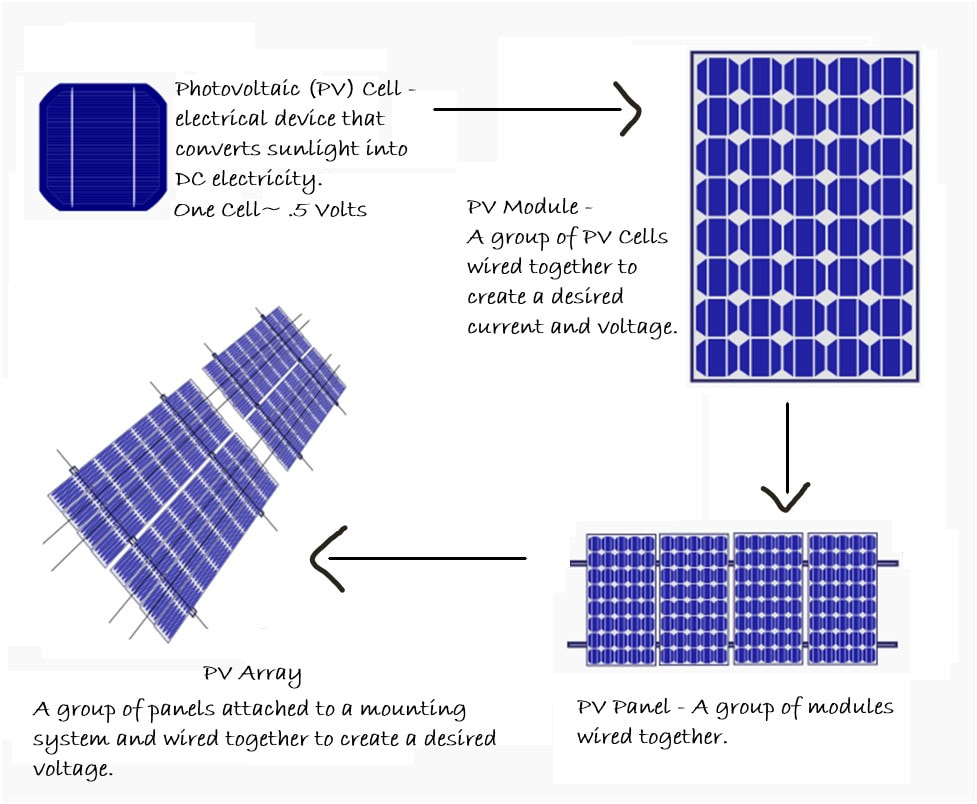
The Solar Energy Module is the key component of any Solar Energy System.
Each module contains small semiconductor wafers:
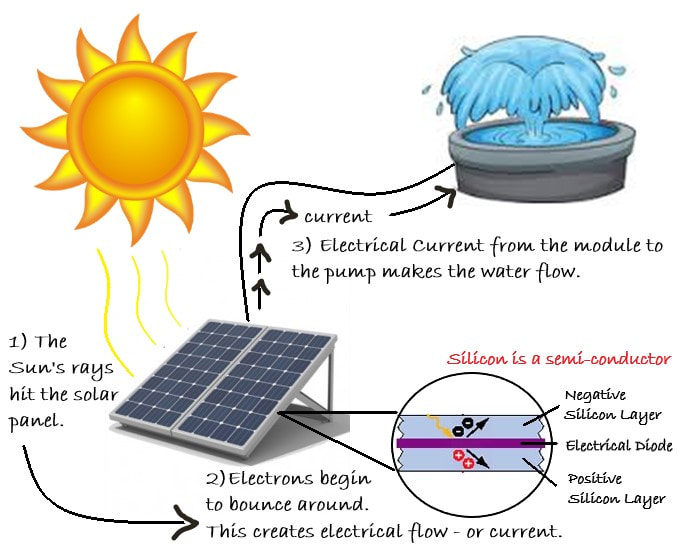
Made mostly from waste silicon, these wafers the convert the sun's light, photons, into direct current (DC) electricity in a process known as the photovoltaic effect. It is then the other components of the system (inverter, AC/DC disconnect, etc.) that covert this electricity into the electricity that powers your home.
The Solar Modules themselves are assigned a rating in watts: based on the maximum power they can produce.
Solar modules are very durable and incredibly long-lasting:
There are 3 available Solar Cell technologies with which Solar Modules are made:
1. Mono-crystalline (Single-crystal) Silicon
Mono-crystalline modules are the most efficient commercially available module
It is also the most expensive of the three to produce
The circular (squaround) design of the cell make for an attractive look, but does create some wasted space on the module itself
2. Poly-crystalline (Multi-crystal) Silicon
These modules are less expensive to make than the mono-crystalline
The cell are slightly less efficient than a mono-crystalline cell
The square shape cells fit into the module efficiently using the entire space
3. Thin Film (Amorphous Silicon or Cadimum Telluride)
The most inexpensive of the three to produce
The efficiency is quite low, about half that of mono-crystalline
The material can be put on a thin and flexible substrate, meaning it can be used in places that the solid, rigid mono- and poly-crystalline modules cannot
The cells are far less susceptible to shading issues
Each module contains small semiconductor wafers:
Made mostly from waste silicon, these wafers the convert the sun's light, photons, into direct current (DC) electricity in a process known as the photovoltaic effect. It is then the other components of the system (inverter, AC/DC disconnect, etc.) that covert this electricity into the electricity that powers your home.
The Solar Modules themselves are assigned a rating in watts: based on the maximum power they can produce.
Solar modules are very durable and incredibly long-lasting:
There are 3 available Solar Cell technologies with which Solar Modules are made:
1. Mono-crystalline (Single-crystal) Silicon
Mono-crystalline modules are the most efficient commercially available module
It is also the most expensive of the three to produce
The circular (squaround) design of the cell make for an attractive look, but does create some wasted space on the module itself
2. Poly-crystalline (Multi-crystal) Silicon
These modules are less expensive to make than the mono-crystalline
The cell are slightly less efficient than a mono-crystalline cell
The square shape cells fit into the module efficiently using the entire space
3. Thin Film (Amorphous Silicon or Cadimum Telluride)
The most inexpensive of the three to produce
The efficiency is quite low, about half that of mono-crystalline
The material can be put on a thin and flexible substrate, meaning it can be used in places that the solid, rigid mono- and poly-crystalline modules cannot
The cells are far less susceptible to shading issues